Translate

Showing posts with label leadership. Show all posts

Saturday, July 1, 2023

An Alliance Approach in Navigating Divisive Issues

Business competition. Businessmen and Businesswomen pull the chain as a symbol of rivalry, competition, conflict. Tug war, two couples pulling circuit in opposite directions. Flat Vector illustration. Business competition. Businessmen and Businesswomen pull the chain as a symbol of rivalry, competition, conflict. Tug war, two couples pulling circuit in opposite directions. Flat Vector illustration. 4 team tug of war stock illustrations

The following article is adopted with a written permission from the original author. The purpose of posting it on this blog is to help the Alliance church members and leaders to navigate divisive issues by identifying the level of severity or sensitivity of the controversial subjects. 

Please contact Pastor Fowler if you would like to quote or share any part of the article. 

This article was not published and is not accessible online. You’re welcome to use the article on your blog.” 

STEVE FOWLER

Church Revitalization Director
Alliance NW District Office

alliancenw.org


In navigating divisive issues, I have found it most helpful to distinguish levels of certainty. Then I can differentiate what is essential from that which is merely controversial. For me, this breaks down into four levels.


First are things I would “die for.” To deny them knowingly would demonstrate that you are outside the boundaries of gospel orthodoxy and perhaps not in living relationship with Jesus.

In navigating divisive issues, I have found it most helpful to distinguish levels of certainty.


Second are things I would “divide for.” We are Christians, fellow members of the body of Christ, but we won’t be in the same local fellowship. 


Third are things I would “debate for.” Here, we are in the same church but we will wrestle (sometimes heatedly) with these issues. 


Fourth are things we “decide for.” These issues contribute to the rich diversity in the life of our church. Let’s discuss each in turn.


Die For

This category contains the foundations of the faith once delivered to the saints for which we contend earnestly (Jude 3). If necessary, the truth of the gospel incorporated in these propositions are things for which we would give up our life. They include the inspiration and authority of Scripture, the Trinity, and the incarnation of the second person of the Trinity as the God-man, Jesus, including his virgin birth, sinless life, substitutionary atonement, bodily resurrection and personal return. Also included is justification and regeneration by grace alone through faith alone which is lived out in gospel centered good works (Eph. 2:8-10; Tit. 2:11-13;3:3-8), the Spirit’s personal indwelling believers constituting the one body of Christ, and the final judgment leading to hell and heaven.


Calling a person who knowingly denies essentials of the faith a brother or sister in Christ for the sake of “unity” truly denies the unity founded on the truth of Jesus Christ. We see a growing progressive wing that calls for humility and broadening the definition of gospel orthodoxy to include universalism. Humility concerning such items can never be a virtue. Some truths are worth dying for.


Consider for a moment the Egyptian brothers who were paraded onto a beach in North Africa by their ISIS captors.  They were told to deny Jesus and convert to Islam or be executed.  This was a “die for” issue for the men and they chose to die for Jesus. 


Divide For

Everyone who affirms the essentials in word and life is a fellow member of Christ’s body, one whom we call brother or sister in Christ. However, other important issues are so foundational to our life with God that we will divide fellowship over them. In ancient times it led to the division between Paul and Barnabas (Acts 15:39). In modern times, these are the foundations of the denominational differences.


The best example of a divide for event in church history would be the Protestant Reformation. Martin Luther's posting of The Ninety-Five theses at Wittenberg is seen as the start of the Protestant Reformation. This happened in the year 1517. In 1515, the Pope started a new indulgence campaign to raise money for the rebuilding of St. Peter’s Basilica, a church in Rome. Preachers came to Germany to sell the indulgences, promising that money could release souls from purgatory.  Martin Luther, a German Catholic monk thought this went too far. On October 31, 1517, he sent his 95 theses to the local archbishop in protest. It is said he nailed a copy to the door of a church in Wittenberg. These theses, written in Latin, were points that Luther wanted to debate. Most of them related to the problems caused by the sale of indulgences. Luther said that the idea the money could buy forgiveness prevented people from turning away from sins. He said that it also made people give less money to the poor.  Without Luther's permission, the 95 Theses were translated into German and sent to many places. Many people agreed with Luther. The Catholic Church tried to stop these new ideas, but without much result. Luther was considered an enemy of the Pope, and when he refused to change his ideas, he was excommunicated


In recent years, we have reduced the number of issues in the “divide for” category. Often this is because there is an attempt to look for unifying points and see the differences within that light. When churches emphasize the power of the Spirit’s work and the fullness of the gifts, the evidentiary significance of speaking in tongues that used to divide Pentecostals and Charismatics is much less significant. As we affirm strongly the centrality of Scripture, fewer will divide over the question of whether God speaks today only through Scripture, or if He also speaks through prophetic revelation.


When the unifying truth of a whole-person spirituality (including mind, will, emotions, body and spirit) is emphasized, churches balance careful teaching of the Word and the expectation of a gospel-centered, heart-level obedience.


Jesus calls us to unity and so we should pursue gospel ecumenism, a spiritual unity that still respects these important differences. This kind of ecumenism promotes true understanding between instead of caricatures of the other groups. It speaks first and primarily of our unity in Christ and addresses others as fellow believers.


Debate For

We wrestle with these issues inside a church or denomination. The wrestling may be prolonged or painful, but we do it while maintaining regular fellowship, joining in worship and service. Debated issues may include the leadership roles appropriate for women, the extent of involvement the church should have in compassionate ministries in the community, the age of the earth, or which musical and preaching styles are best in a worship service. 


It seems to me that we must keep debate forsfrom escalating into divide fors. The best leaders keep the unity of the body at the center of our thinking as Paul admonishes us in Ephesians 4:3. These leaders are also able keep the focus on the essentials even when the wrestling is strenuous.


I find that when churches try to maintain unity by silencing the debates or smoothing things over with “nice” words, divisive folk are often empowered. The divisive people continue to promote their wrangling without being called to responsibility by the wisdom of the group.


The ground rules of Acts 15 seem appropriate in resolving these issues in congregations. Paul took the divisive people back to their body in Jerusalem, where everyone spoke for themselves before the whole church. They spoke what they believed and to the issue at hand rather than to the errors of the other group and to irrelevant issues. The whole congregation listened and recognized the wisdom of James as he stood for essentials (justification by faith alone apart from observance of the Mosaic Law) and proposed compromise on secondary issues. They led the group in wise decision-making, rather than making decrees and enforcing decisions by weight of authority. The size of the group of people involved would vary depending on the significance of the debated issue.


Decide For

These are the kinds of issues addressed in Romans 14-15, the areas of belief and behavior about which there is no law. This is where acceptance is a virtue and legalism a real danger, especially as divisive people latch onto lower-level issues, raising them into foolish controversies (1 Tim. 1:4; 6:4-5; 2 Tim. 2:14-16, 23-26; Tit. 3:9-10).


Paul instructs us to stop judging one another over such issues, to stop holding others in contempt because they differ here. Rather, he directs us to accept each other, urging us, “Let us therefore make every effort to do what leads to peace and to mutual edification” (Rom. 14:19).

Note well, this accepting attitude applies only in the non-essentials. Difference in essential matters like what is required for becoming a true Christian “brought Paul and Barnabas into sharp dispute and debate with them” (Acts 15:2).


Conclusion

How do you discern the differences between these levels of certainty? In my judgment, the discernment revolves around the centrality and clarity the issue takes in Scripture and the significance of the issue for our faith.


Jesus as God incarnate in full humanity, who lived a sinless life, is a die for. Scripture is clear that Jesus did not sin. Those who affirm that He sinned in order to establish His full humanity may appear sensitive to human problems, yet, they exclude themselves from gospel orthodoxy when they do.


In my judgment, the discernment revolves around the centrality and clarity the issue takes in Scripture and the significance of the issue for our faith.


When a church decides to affirm a sexual expression, which scripture has forbidden,members of the church often will divide over this decision. The United Methodist Church (UMC)announced a proposal to split the denomination over what it called "fundamental differences" regarding its beliefs on same-sex marriage and LGBTQ clergy. This has become a divide for issue for some in the UMC.


What did Jesus mean when He cried out, "It is finished" (Jn. 19:30) and died? Did He mean He finished the work of propitiating the wrath of God toward elect sinners whom God chose based on His sovereign purposes alone (definite atonement in Calvinism)? Or did He mean He had finished the arduous work of atonement to provide payment for the penalty of sin for all who would receive Him, whom God chose based on His perfect foreknowledge of their choice from all eternity (universal atonement in Arminianism)? These sorts of questions that have to do with different ways of connecting scriptural affirmations are often debatefor issues.


Which songs shall we sing in church? Should the fellowship hall floor be covered with linoleum or carpet? Can we sell Christmas ornaments in the lobby at church? These are excellent examples of decide for questions.


The struggle with division in the church is when our lack of spiritual maturity and/or our divisiveness escalates matters from a decide for or a debate forcategory to something we must divide for or even die for.  The subtleties of our comments often betray our lack of wisdom.  I remember a church leader saying, “If that ever happens here, it’ll be over my dead body!”  This leader had escalated a decide for issue all the way up the ladder to something he would fight to his metaphorical death over. 


As we comprehend these levels of certainty and begin to employ them as a community of believers, we can avoid the trap of being unnecessarily divisive on one hand and compromising the faith on the other. As we emphasize the essentials, we are less likely to fall for the cultural accommodations of Christianity that lead to liberalism. That also helps us keep secondary issues in perspective and avoid the divisions they create.


Friday, April 14, 2023

Monday, June 13, 2022

Christian Leadership: Authenticity Indicators

The following is an except of a research paper on Relational Leadership as part of the course works submitted to Western Seminary Ed.D program. 

Operational Guidelines

            Relational leadership requires time to develop. The following is an attempt to use an acronym of “L-E-A-D-E-R-S-H-I-P” as guidelines in cultivating the relationship between leaders and followers as Paul to the leaders in Ephesus (Acts 20:17-38).

1.     L-ove is the most excellent way that Paul was dealing with the problems of leadership and issues of spiritual gifts (1 Cor. 12-14, Rom 12, and 1Tim 1).

2.     E-quip the saints and edify the church are the most essential relationship and function of the church between leaders and followers (Eph 4).

3.     A-ble to teach and lead, as a crucial part of the great commission to make follower by “teaching them to obey all that I’ve commented to you” (Mat. 28, 1,2 Timothy, Titus).

4.     D-irection-driven not data-driven, is a spiritual direction relationship, where relational leaders first learn to hear well from God and provide spiritual direction to followers in a formal or non-formal setting.

5.     E-xcellent in leading right, leaders are right a lot in making planning, implementing, and reflecting for improvement (“right a lot” is an Amazon leadership principle that helps the company became one with most followers/ customers nowadays, the Church can learn and contribute to this topic).

6.     Re-productive, Relevant, Renewal, Reflective-Practitioners, literally leaders give birth to new leaders by their inspiration, instruction, delegation, coaching, and passing on from generation to generation.

o   Relevant- 3 factors to deal with- corporate culture, personal leadership, stakeholders’ emotion, (DNA)

§  Develop a Lab Mentality, always experimenting, trying, failing, learning 

§  Never Stop Learning, leaders are learners, skills will bring success (Ecclesiastes 10:10)

§  Acknowledge the grieve, “"There is no growth without change. There is no change without loss. There is no loss without pain. There is no pain without grief" 

§  Don’t try to be in style, 

§  nothing stays the same, the only way to be eternal is to be timeless, look at your organization and find what never change, vision is to see the current opportunity and jump on it, what needs to change and what never need to change is the winning combination, build on what is not going to change, people life and problems

§  Ask the right questions and answer them rightly

o   Renewal[1]-  when you study church history it always starts through certain stages: 

§  first stage is personal renewal, in the heart after holiness

§  then the corporate renewal, one of the ways you know a church is having corporate renewal is the singing gets better, and people stay longer after church

§  third aspect of a resurgence is a "missional renewal" or "purpose renewal," 

§  structural renewal because as an organization grows you have to change structure over and over

§  finally, cultural renewal the climate of the nation actually changes

7.     S-ubmissive/ Spiritual Authority first as an important discipline, to God then to all people, in Christ through a form of institutional authority as practiced by the Alliance denomination. Dr. Rod Reimer, Alliance Seminary professor, has once entered a season to study Moses and learned that spiritual authority is given, developed, and exercises by having face-to-face relationship with God. This is his definition, “spiritual authority is rooted in identity, expended through intimacy, and activated by faith” as it is seen with Moses winning the battle in Exodus 17, and with a police officer stopping a car with given authority. 

8.     H-umility, integrity, venerability, and transparency that Christ has modeled, and our culture has desperately needed. 

9.     I-ntegrity before intelligence, leader is first a human being before a human-thinking/doing, one can lead as far as one’s character and charisma, connection and capability, in order to influence followers. A leader’s integrity has to be accountable to the leadership team contextually through multiple intelligences (IQ, EQ, AQ, CQ, RQ, SQ, TQ etc.).

10.  P-artnership with long term commitment and eternal investment in followers’ life. 


Other resources:

7 Markers Of A Great Leader

By Ron Edmondson on Oct 26, 2023

Great leaders are multidimensional. While continuing to improve, great leaders have achieved certain characteristics which help them achieve success.

Humility.

Great leaders are willing to surrender “their” way when it’s not the best way. They realize and appreciate the strength of a team.

Intentionality.

Great leaders continue to learn. They have mentors. They read. They continue their education through conferences or school. They know they can’t help others grow if they aren’t personally growing.

Compassion.

Great leaders consider the needs of others ahead of their own. They care about people beyond what people can do for them personally.

Integrity.

Great leaders never separate character from their definition of quality or success. They know there can be nothing of real value if those who are trying to follow can’t give their respect to the leader.

Passion.

Great leaders have the ability to rally a team and articulate the path to victory. They can communicate to spur momentum and garner support.

Vision.

Great leaders see things others can’t see or, for whatever reason failed to pursue. They take people where they need to go, but may be afraid to go on their own.

Strength.

Great leaders have the discipline to follow through on commitments. They weather the storms of time. They are still standing firm when others are dropping out of the race.

Thursday, June 9, 2022

反思如何建立下一代的信徒領袖:門訓導向的宣教

最近想到在香港或美國的青年信徒,在這些年間面對著教會內外的沖擊,有的「隨波逐流」,有的「逆來順受」,有的「逆流而上」。重讀這篇文章時,身份已經不再一樣。教會現在比任何時候更需要反思如何建立下一代的信徒領袖。(文長慎入

重點介紹:
(目的)若希望信徒能「上位」事奉、承擔教會的事工、參與宣教的工作, 教會一定要 提供「到位」的牧養, 讓信徒能成長、被建立。
(過程)
人的成長需要進程,也需要時間和 付代價... 整個門徒訓練的目標是「⋯⋯把各人 在基督裡完完全全地引到神面前。」(西 一28)我們也包括在「各人」之內。這培育的過程不是我們的努力使人成聖,而是透過我們的參與,神彰顯祂在人生命中改變的大能(參西一29)。
(重點)
  • 這門徒訓練的方 向包括生命的投資(life investment)、生 命的倍增(multiplication)和生命的守 望(accountability)... 
  • 門徒成長需要安全的 環境(safe place)與讓他們安心的人(safe people)在一起。關係式的門徒訓練能夠 提供這樣的環境讓信徒在基督裡長進。
  • 關係式的門 訓其實是一種同在,在這同在中互相鼓 勵、提醒和學習,好像耶穌呼召門徒有 兩個目的(參可三14、15):一.耶穌同 在( b e i n g ); 二 . 被 差 去 傳 道( p r e a c h i n g ) 和給予權柄趕鬼(doing)。
  • 耶穌先強調門 徒與祂的關係,在關係中被建立,建立 以耶穌為中心的靈性生命(Christ-centered Spirituality)。然後,他們才被耶穌差派 出去,活出以耶穌為中心的事奉(Christ- centered Ministry)。6 在這裡,我們看到 耶穌對門徒期望的優先次序:先靈命,後 事奉。
  • 保羅的說話帶出門徒訓練的真義:自己先 效法基督,才勸人效法基督;自己先成為 門徒,才能使人成為門徒。
  • 能缺席,就能讓出空間; 能退隱, 就能放下權力。如此,創造了條件, 讓服事的對象可以自己成長。
The original article is written by Dr. Wing Lam (a dear brother and pastor of my home church in NY), accessed on 10/29/2020, https://www.cccowe.org/pdf/ps/201605/art11.pdf


Sunday, June 5, 2022

小小分享關於「說服力」和「招攬新同工」的一些初步整合 R.E.C.R.U.I.T.


前幾天前到公立圖書館看到這本書,被書的標題和目錄吸引,認為對於基督徒在這個時代,見證福音有很大的提醒。這本不是從信仰的角度來看「說服力」或「人格特質」,但內容值得我們深思。所以建議有興趣的朋友可以參考這篇書評。而我只想簡單分享一個實際的問題,就是如何在教會中「招攬新同工」(recruit ministry coworkers)。

其實與其他機構一樣,教會也不斷尋求有效的計劃和策略來「招攬新同工」,無論是在團契,主日學,執事會,青年兒童,或長者事工,都需人力物力來建立健康的團隊和健全的事工。人力資源和人力管理是教會建造基礎建設的關鍵,如以下的描述和提示:

那降下的,就是高升遠超越諸天之上的,為要充滿萬有。 他所賜的有使徒,有先知,有傳福音的,有牧者和教師, 為要裝備聖徒,做事奉的工作,建立基督的身體, 直等到我們眾人在信仰上同歸於一,認識 神的兒子,得以長大成人,達到基督完全長成的身量。 (以弗所書4:10-13 和合本2010)

「人力」是從位那位使我們「蒙恩」和給我們「恩賜」的主而來。在「招攬新同工」的過程中,教會一同經歷「他所賜的有… 達到基督完全長成的身量。」

我們可以認定,所有能服侍神的人都是主賜給教會的。所以我們更有信心祈求主賜下更多「新同工」來建立教會。以下是早上禱告時的一點點靈感,願能幫助特別需要「招攬新同工」的教會: 

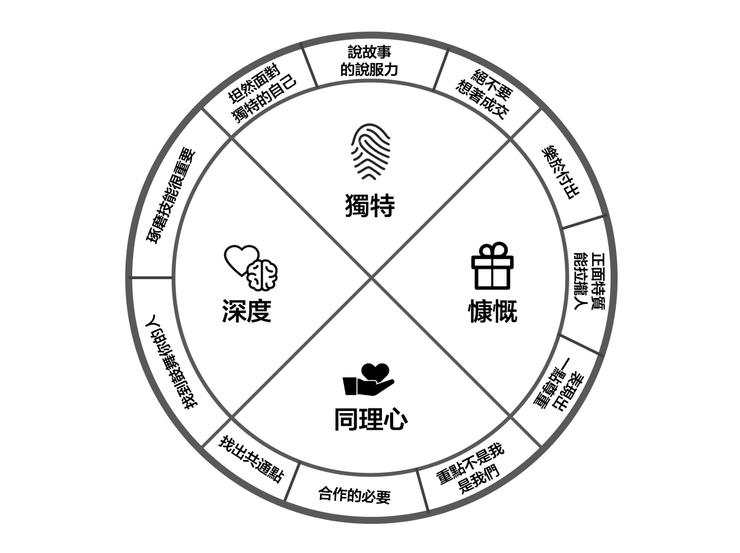
Leadership: 對於「說服力」和「招攬新同工」的一些初步整合 R.E.C.R.U.I.T.

Reach out with a vision- 推銷的不是產品,而是品牌。教的事工也應有「異象的品牌」。用正面特質來讓「新同工」明白被邀請參與的獨特目的。

Encourage with compassion- 經禱告後,慷慨地約見或者公開招攬,把「異象的品牌」用一個人化鼓舞的故事,真誠地傳遞。

Call for action- 絕對不要只想着「成事」,反而提醒自己要有同理心,分享同工(合作)的必要和好處,留意服侍的重心從「我」轉到「我們的主」,

Reach out again with vision- 大概一星期後再次分享「異象的品牌」,不論對方是否願意參與這項事工,都表達出十分的尊重和祝福。如果「新同工」答應了,可以藉著下面三方面著手。但如果是「食詐糊」,可以再次禱告物色人才,再次以上面三方面著手。

Undo the programming mind for more personal growth- 事奉很多時候需要實際的操作和計劃,所以常常忽略了彼此的關懷,找出共同點和找到鼓舞我們的人,共同成長和持續「招攬新同工」的團隊特質。

Ignite the power with prayer- 禱告是團隊的領袖首要的任務,可謂有禱告,有力量,不禱告,沒人到。禱告的領袖有更多機會學習坦然面對獨特的自己,樂於付出,才能擁有正面特質來影響別人(拉攏人)。

Train them to train others- 事奉需要有持續的熱度和深度,事工能夠生生不息,透過持續的栽培,琢磨技能很重要


後記- 傑森認為能夠讓人更具說服力的性格可分為四大類:

  • 獨特的:讓人感覺是真誠發自內心的,言談間你可以窺見其真實獨特的個性
  • 慷慨:習慣性地付出,也許是建議、機會、引介、尊重和正向情緒
  • 同理心:對人自然地感到好奇、談話很投入,重視人的共通點而非彼此的差異
  • 有深度的:遵循自己設定的原則與標準,也激勵其他人突破平常的侷限
that wanaka tree
具有說服力的四大原則以及11項性格特質


參考資料:

https://www.cnbc.com/2022/06/14/i-coach-ceos-of-million-dollar-businesses-heres-what-i-wish-more-people-did-early-in-their-careers.html?utm_source=facebook&utm_medium=news_tab

Friday, June 4, 2021

Christian Leadership: Character (Trustworthiness / Integrity)

 Trustworthiness

诚字图片


In ministry, you cannot go faster than trust, or go further than trust. 

You will only have truthful friends if you are truthful first. 


Prov. 20:28 王因仁慈和、得以保全他的國位、也因仁慈立穩。

Prov. 27:6 朋友加的傷痕出於.仇敵連連親嘴、卻是多餘。

Prov. 28:20 人必多得福、想要急速發財的、不免受罰。


John 4:23 時候將到、如今就是了、那真正拜父的、要用心靈和拜他、因為父要這樣的人拜他。

John 4:23 (Msg) But the time is coming—it has, in fact, come—when what you’re called will not matter and where you go to worship will not matter. “It’s who you are and the way you live that count before God. Your worship must engage your spirit in the pursuit of truth. That’s the kind of people the Father is out looking for: those who are simply and honestly themselves before him in their worship. 


Some thoughts on re-opening

1. Worship: in Spirit & in Person (Christ and His local, visible body) 

2. Word: in Spirit & in Scripture (risen Christ points us to the Scripture, and Scripture points us to Christ)

3. Work: in love& obedient

4. Whole person: all the heart & soul & mind & strength 


What is the Will of God for Worship, Discipleship, and Fellowship? 


默想主的應許,對我們和「回歸聖殿群體」的意義

12 夜間耶和華向所羅門顯現、對他說、我已聽了你的禱告、也選擇這地方作為祭祀我的殿宇。 13 我若使天閉塞不下雨、或使蝗蟲喫這地的出產、或使瘟疫流行在我民中. 14 這稱為我名下的子民、若是自卑、禱告、尋求我的面、轉離他們的惡行.我必從天上垂聽、赦免他們的罪醫治他們的地。 15 我必睜眼看、側耳聽、在此處所獻的禱告。 16 現在我已選擇這殿、分別為聖、使我的名永在其中.我的眼我的心也必常在那裡。” (2 Chr. 7:12-16 CUV-TRAD)


Sunday, March 7, 2021

Christian Leadership: Four Practical Tasks (Adopted)

 Osmer-Practical-Theology

Richard R. Osmer, Practical Theology: An Introduction. Eerdmans, 2008.

These practical tasks come back to my mind when I reflect my current ministry context and interacting with different leaders. Owner’s proposed tasks are theologically sound and spiritually grounded. It is helpful or at least healthier to look at challenging seasons of ministry as an interactive journey than a problem-solving work. The questions listed under each task could provide leadership team a good starting point for discussion. 

The following post is adopted from http://www.lifeandleadership.com/book-summaries/osmer-practical-theology.html

LifeandLeadership.com Summary

While the title says “practical theology,” it is more pastoral theology in the sense that is adopted by LifeandLeadership.com (reflective of the historic German Protestant tradition, cf. Woodward and Patton, The Blackwell Reader on Pastoral Theology). Not all would draw a distinction between the two, but the literature of the field usually manifests a difference of emphases. Practical theology, sometimes called “applied theology,” seeks to apply the classical theological truths of Christianity to the thoughtful engagement of life-concerns and the practices of the Christian church such as worship, mission, preaching, etc. Pastoral theology is a kind of practical theology, but with a narrower focus on the role of Christian leaders. As “pastoral” theology,” it conveys the process and results of reflecting theologically on work of “shepherding” the flock. Authors often use the terms practical and pastoral theology interchangeably, and there is enough common ground between them to merit this. But when categorizing the literature, especially that which comes from the U.S., it often helps to separate them.

Osmer provides meaning to the practice of ministry by harkening back to the way God provided Israel with leaders over the course of his unfolding covenant relationship. He says:

“God provides Israel with leaders, anointed with the Spirit of God, to help it live with covenant fidelity. Priests play a special role in Israel’s worship of God, overseeing the cult of offering sacrifices to God on the people’s behalf. Judges, sages, and kings provide leadership in the organization of the covenant community, offering wise teachings, settling disputes guiding its political affairs, and protecting it against external threats. Prophets speak God’s word to Israel, announcing divine judgment when it strays from covenant fidelity, calling it to repent, and offering hope if it returns back to God.” (28)

He says the New Testament builds on these images, first by presenting Christ as the true priest, king, and prophet who fulfills, personifies, and transforms each of these offices. Based on this, the Reformers traditionally emphasized this threefold office of Christ. In keeping with this tradition, Osmer uses these three images to construct a pastoral theology of congregational leadership. He lays this out in four chapters (summarized on p. 28):

  1. The Descriptive-Empirical Task (or “What is going on?”): Priestly Listening, or “What is going on?” – This is grounded in a theology of presence, attending to others in their particularity within the presence of God.
  2. The Interpretive Task (or “Why is this going on?”): Sagely Wisdom – This is grounded in a spirituality of sagely wisdom: guiding others in how to live within God’s royal rule.
  3. The Normative Task (or “What ought to be going on?”): Prophetic Discernment – This is grounded in a spirituality of discernment, helping others hear and heed God’s Word in the particular circumstances of their lives and world.
  4. The Pragmatic Task (or “How might we respond?”): Servant Leadership – This is grounded in a spirituality of servant leadership, taking risks on behalf of the congregation to help it better embody its mission as a sign and witness of God’s self-giving love.


To say that each of these roles is a “spirituality of…” conveys that practicing them is more than a matter of skills and competence, but a kind of reliance on the guidance of the Holy Spirit.

Osmer closes with a lengthy essay on how to teach practical theology in school of theology. It is quite good for those engaged in this work.

From the Publisher

Every church congregation encounters challenging situations, some the same the world over, and others specific to each church. Richard Osmer here seeks to teach congregational leaders—-including, but not limited to, clergy—-the requisite knowledge and skills to meet such situations with sensitivity and creativity.

Osmer develops a framework for practical theological interpretation in congregations by focusing on four key questions: What is going on in a given context? Why is this going on? What ought to be going on? and How might the leader shape the context to better embody Christian witness and mission?

The book is unique in its attention to interdisciplinary issues and the ways that theological reflection is grounded in the spirituality of leaders. Useful, accessible, and lively—-with lots of specific examples and case studies – Osmer’s Practical Theologyeffectively equips congregational leaders to guide their communities with theological integrity.

About the Author

Richard Robert Osmer is Thomas W. Synnott Professor of Christian Education and Director of the School of Christian Education at Princeton Theological Seminary in Princeton, New Jersey.